

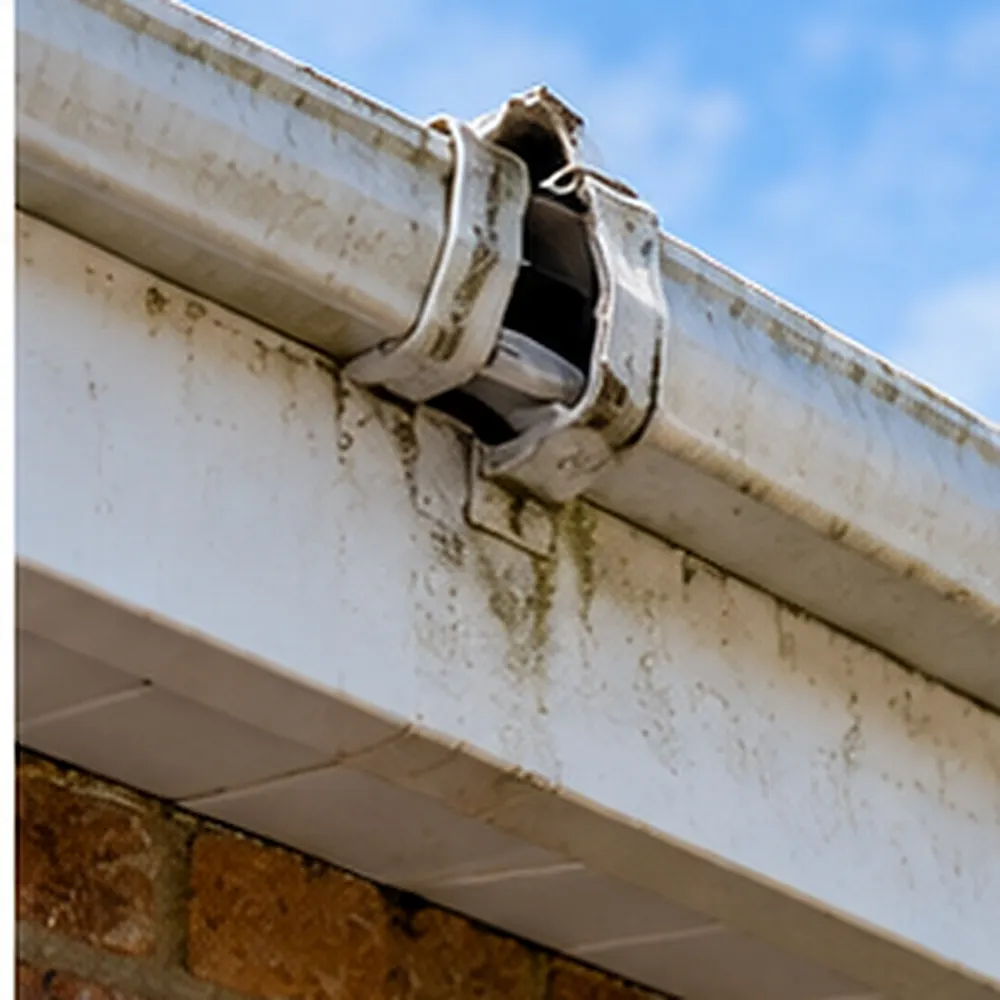
 Before
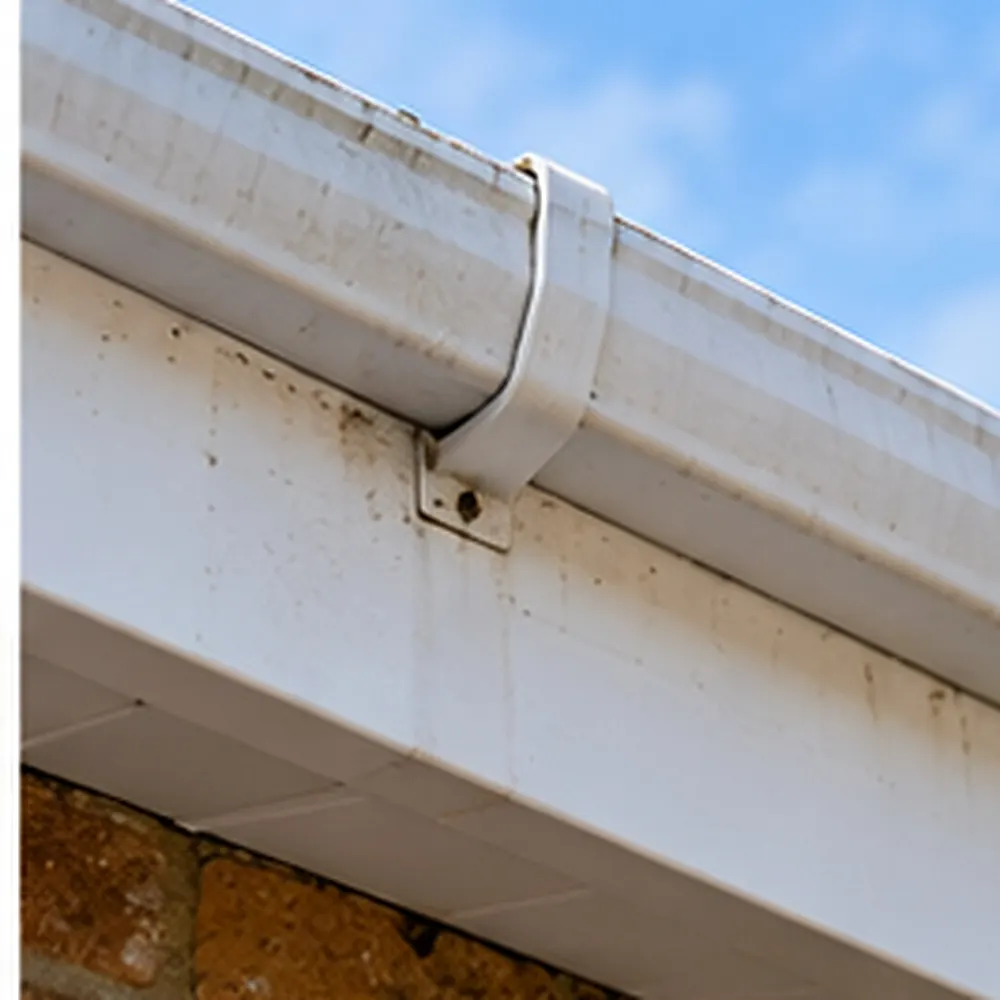 After
What causes guttering to leak or drip following heavy rainfall?
Guttering usually leaks or drips after heavy rain because a joint seal has perished, the gutter or outlet is blocked, or the gutter has lost its fall so water pools. Cracks, gaps behind the gutter and gutters too small for the roof are other common causes.

Updated November 2026
Compare guttering quotes
What do you need doing?
Your answers will be added to your quote request.
Our quote request form requires cookies to work. Please accept cookies to view the form and request a quote.
How this site uses cookiesLast step: how can contractors reach you?
Takes about 30 seconds.
Wet weather keeps gutter contractors busy and diaries can fill up quickly, so don't delay.
The quote form didn't load. This is usually caused by an ad blocker. Please pause it for this site and try again.
Your answers are in the form
We've put your answers into the description box on the form.
Tip: contractors can quote more accurately when they know more. Add which side of the house is affected, what you've noticed and anything that could make access tricky, such as a conservatory or a steep drive.
Why do gutter joints leak?
Gutter joints leak because the rubber seal inside each uPVC union wears out over time. Sunlight and temperature changes make the seal hard and cracked, and the gutter expanding and contracting can pull it out of place. On cast iron gutters, the sealant between bolted sections dries out and cracks. A dripping joint is often only noticeable in heavy rain, when water flows fast enough to reach it.
How does a blockage cause dripping?
A blockage causes dripping because water backs up behind it and finds the weakest point to escape. That may be over the front edge, through a joint, or behind the gutter. Blockages usually form at outlets and corners, where leaves, moss and silt collect.
What happens when a gutter loses its fall?
When a gutter loses its fall, water sits in the gutter instead of running to the outlet. The standing water adds weight, strains the brackets and keeps joints permanently wet, so they leak. Loose or broken brackets are the usual cause.
Can water run behind the gutter?
Water can run behind the gutter when the roof covering doesn't reach far enough over it, or when the gutter has dropped away from the roof edge. Rain then runs down the fascia board and wall. A strip called an eaves protector, or a small adjustment to the gutter's height, can solve this.
Can gutters be too small?
Gutters can be too small for the roof, especially on large roof slopes or where an extension drains into an existing gutter. In a sudden downpour, an undersized gutter overflows even when clean. Blackburn's heavy rain shows up undersized gutters quickly, and a deeper profile or an extra downpipe may be the answer.
What about cracks and splits?
Cracks and splits come from frost, impacts such as ladders leaning on the gutter, and plastic that's brittle with age. Corners and stop ends are common weak spots.
How do you find the cause?
You find the cause by watching your gutters during heavy rain and noting exactly where water escapes. Dripping at a joint suggests a seal; water over the front edge suggests a blockage or a lost fall; water down the fascia suggests a gap behind the gutter. Photos help contractors diagnose the fault. Most of these problems can be fixed with gutter repairs.
More questions like this
- How much do homeowners in the UK usually pay for gutter repair?
- What is the most suitable season to schedule gutter repairs?
- Should you replace guttering that is more than 20 years old?
- What is the average price of repairing gutters that are sagging?
- How much do professional gutter repair services usually charge?
- Is it possible to fix sagging guttering without a full replacement?
- Can homeowners carry out basic gutter repairs themselves?
- Why do gutters become loose, sag or detach from the fascia boards?
Gutters need attention?
Describe the job in about a minute and compare local quotes.